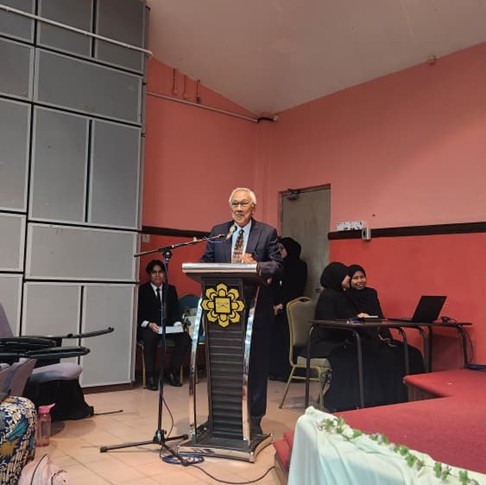
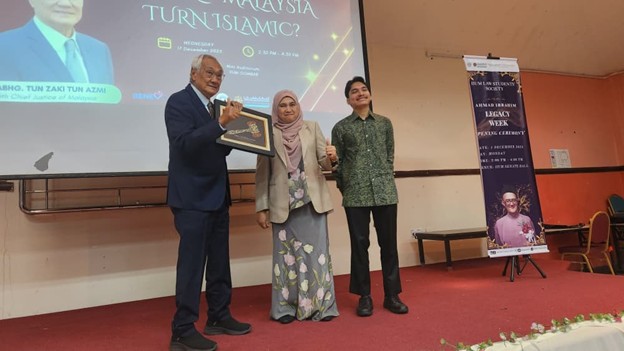
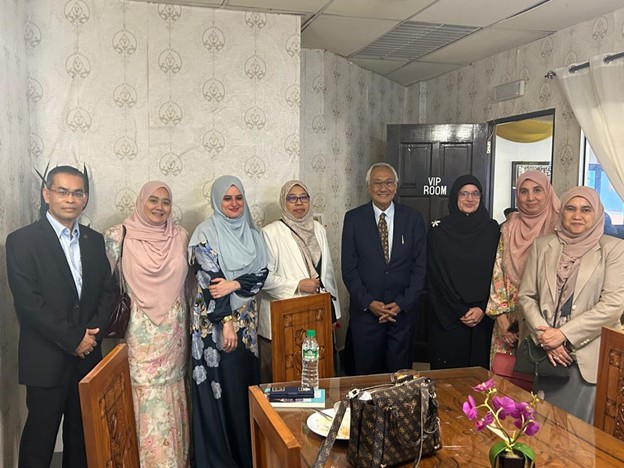
GOMBAK, 17 December 2025 – Former Chief Justice of Malaysia, YABhg Tun Dato’ Seri Indera Setia Zaki bin Tun Azmi, delivered an incisive Expository Lecture at the International Islamic University Malaysia (IIUM) today, offering a critical assessment of contemporary developments in Malaysia’s legal landscape.
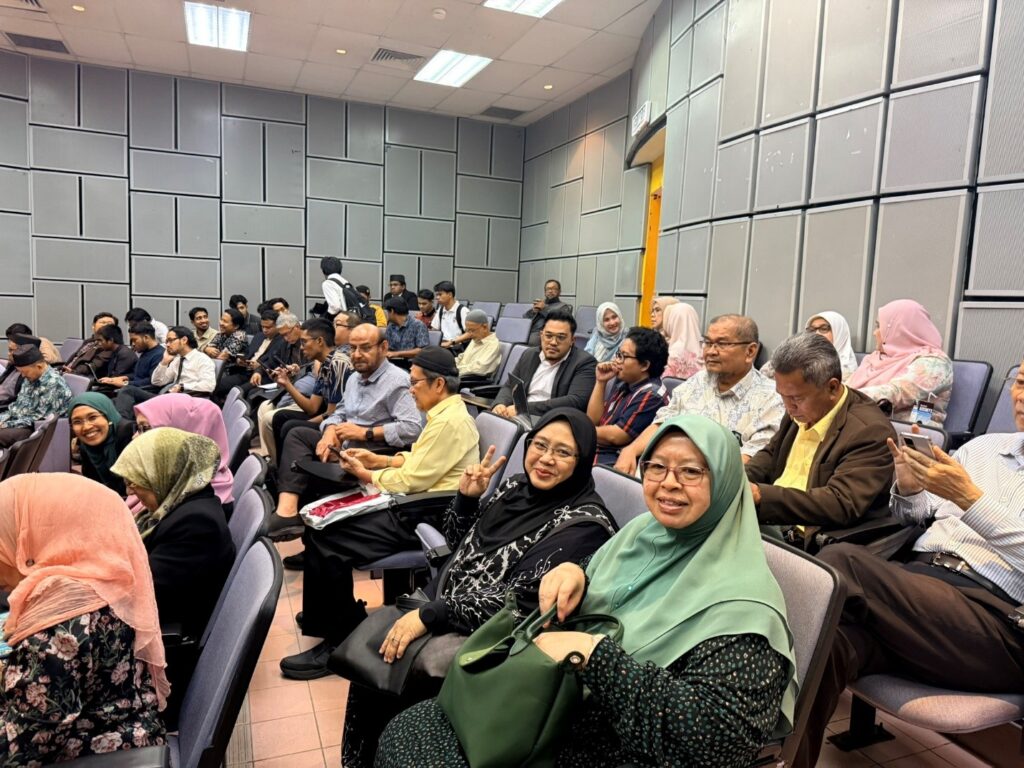
The lecture, held at the Mini Auditorium, was organised by the Law Society (LAWSOC) 2024/2025 and attended by academic staff, legal scholars, and students underscoring the significance of the issues addressed during the session.
The central focus of the lecture was Tun Zaki’s critique of recent judicial developments concerning State legislative powers in matters of Syariah law. In particular, he addressed the implications arising from the Nik Elin decision, which involved a constitutional challenge to provisions of the Kelantan Syariah Criminal Code.
Tun Zaki expressed concern that the decision may erode the legislative competence of State Legislative Assemblies and further constrict the jurisdiction of Syariah courts vis-à-vis the Federal List. He cautioned that such developments risk unsettling the constitutional balance envisaged by the framers of the Federal Constitution and called upon the legal community to re-examine the original constitutional design governing federal–state relations.
Turning to the application of law in Malaysian courts, Tun Zaki advocated for a more disciplined and localised hierarchy of legal sources. He emphasised that Malaysian courts should give primacy to domestic statutes and customary laws before resorting to foreign legal authorities. Tun Zaki too expressed his disagreement over the introduction of basic structure doctrine, a foreign legal doctrine, into Malaysian legal realm by the Malaysian Federal Court. He argued that the federal constitution of Malaysia is supreme and that basic structure doctrine has never been written in the federal constitution of Malaysia, thus our court should not have added something which has never exist in our federal constitution.
He further stressed that while Malaysian federal constitution is supreme, the same federal constitution allows its constitutional provisions to be amended according to specific modes of amendment as enshrined in the federal constitution itself.
“Our priority must always be the written statutes enacted by Parliament,” he said. “Thereafter, due regard must be given to customary laws that embody the values and traditions of Malaysian society. English law should only be referred to as a last resort.”
He cautioned that excessive reliance on English common law may result in outcomes that are incongruent with local societal norms and values. He further urged members of the legal academy, particularly legal scholars and researchers, to play a leading role in developing a distinctly Malaysian common law grounded in local legislation and customs.
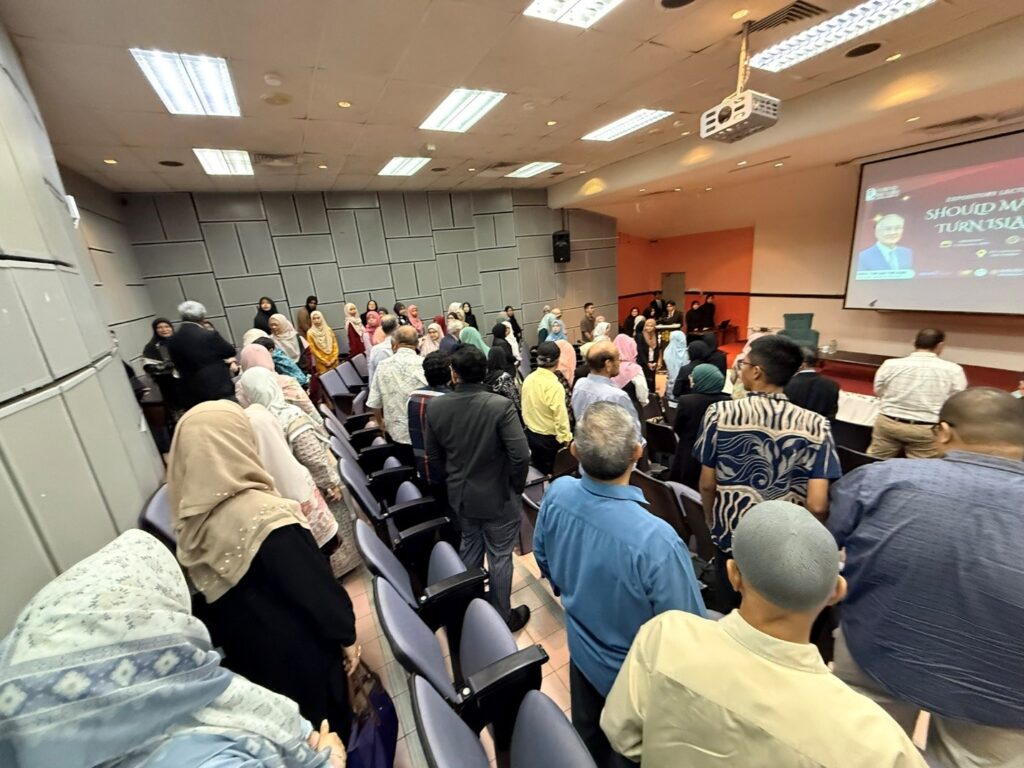
The lecture concluded with an interactive question-and-answer session. The organisers noted that the discussion was especially timely for the Ahmad Ibrahim Kulliyyah of Laws (AIKOL), in light of ongoing scholarly and legal debates surrounding the harmonisation of civil and Syariah law in Malaysia.
A representative of the organising committee remarked that the lecture served as a reminder of the academic community’s responsibility to contribute to the development of a legal system that reflects Malaysia’s constitutional structure, legal traditions, and national identity with significant points for reflection on the future direction of constitutional interpretation and the role of customary law in Malaysia.